
In marketing, one of the circular activities that we are hopeful to see integrated into many businesses are honest customer reviews. Reviews are a great way to help promote your business and also provide confidence with new customers, drive sales and also internal improvements thanks to the feedback received. The benefits of reviews ensure that, as a business, you can understand exactly that customers think about their interaction with you at various stages of the customer journey. If implemented as a holistic approach through the entire business, you can gain insights about what is going well, and not so well, before they become systemic problems. They are also used by marketing channels to help rate your business performance so read ahead, it might help you drive some great results!
It’s important to gain reviews from customers organically (unprompted) and prompted. Organic reviews tend to be more detailed as the customers is feeling strong enough to write about their experience, good and bad, where promoted tend to be less informative. All are valuable and need to be managed accordingly.
Here’s just some key things to help you bring reviews in to your business.
WHY REVIEWS ARE IMPORTANT
Some of the key reasons you want honest reviews are:
Builds Brand & Product Awareness
People talking about your business or your product across various sites is going to help build awareness. If it’s positive, then it’s a massive win but negative reviews, if managed well, can become positive.
Helps encourage new customers
They can influence new customers to purchase or engage with you. Consider them as old fashioned word of mouth – just in various formats. Customers who see positive reviews are more likely to purchase as this encourages their confidence. Actually, according to Inside Retail <ref>, 70% of online customers read reviews so it’s highly important to business success.
Maintain competitive position
Reviews ensure that you won’t be forgotten, keeping you front of mind when consumers are working through their purchase process. This will ensure that you stay within the consideration set for customers trying to decide what, where and who to purchase from.
Improves SEO & Search
This is a big one. You spend so much time on getting organic reach across all of your channels and reviews will help support this. Search engines, like google, and Facebook, react positively to reviews including page ratings and search rankings. The higher your rankings, the harder your pages are working for you.
Drives Sales
This should be a given but positive reviews will always help to influence people to purchase from you, driving sales. The World Financial review reports that reviews can drive, on average, an 18% increase in sales. So when you think about the effort required to gain and manage reviews, they can definitely deliver a lot of value to your business.
Improves Employee Satisfaction
Many people forgot that working for a company that has a positive brand is going to make employees feel proud to work there, improving satisfaction. In turn, this also means that staff retention is going to be better which will help maintain IP, save on re-training and ensure that customers are not negatively impacted by high staff turnover (staff control the customer service so this is important).
WHERE REVIEWS ARE FOUND
Reviews can be found on all social media channels, google and other search engines, websites, third party pages, review pages such as choice and product review. There’s lots of different places where customers can provide feedback, good and bad, to help, or hinder, your business. Knowing all of these channels and keeping a regular eye on them is going to help you keep on top of what people are saying about your business.
These are just some of the reasons but receiving positive reviews is only going to help your business thrive. Negative reviews are challenging and can be frustrating as a small business, but having a process to manage them and responding to them in a professional manner can help turn a negative into a positive outcome.
Owned channels
Reviews on your website, social pages, eDMs & any other communication that you can control is a bit of a no brainer. You have greater control over your owned channels so sharing reviews that you’ve received will only help build a positive brand association.
Advocacy and consumer groups
These are independent bodies who conduct reviews & provide recommendations to customers, generally comparing different products. They are viewed as some of the most reliable reviews though don’t cover all products / services.
Dedicated review sites
Sites like productreview.com.au allow customers to leave independent reviews & are great as they cover the good, bad & ugly. As a business, you can purchase a membership that allows you to respond to reviews & engage with customers. This is a great as it allows you to actively own a bad situation and work to make it better (noting that you will never please any one – if you think you can let me know how!)
Social networks
Customers love leaving reviews on all sorts of social pages, pending their experience. You want them to leave reviews on your page as that will help to build page ratings and help your social media advertising work better. Remember – don’t retaliate in this forum as it will only gain legs!
Friends, family & communities
The most influential channel of all time. Remember that customers will share their good and bad experiences with friends and family and community groups so make sure that you focus on the theory that every interaction counts!
HOW TO GENERATE REVIEWS
According to Shopify (https://www.shopify.com.au/blog/15359677-why-online-store-owners-should-embrace-online-reviews), 68% of customers leave reviews when prompted so it’s really important to consider how to bring a simple ask into your sales process. Based on this, one of the simplest but most effective way to generate reviews is to ask customers for them. Building this into your sales and engagement process is going to help drive reviews.

Ask for them
The simplest yet most effective – simply ask customers to consider leaving you a review & tell them where. According to Shopify 68% of customers leave reviews when prompted so asking will drive results. Building the question in to your sales or engagement process is going to be the most effective way to gain customer reviews. Training all of your team members on the reason why you want them to ask for them is going to help build their confidence in asking this question. It’s important that you re-iterate to team members that this isn’t something that is targeting them only but wanting to capture the whole experience the customer has had with your business. Some team members may feel that this is related to a performance management activity and, in some circumstances, reviews may result in employee feedback but being clear on steps that will be taken will ensure that team members are not uncomfortable and feel that they are being targeted.
Incentivise
Many businesses choose to incorporate incentives as a way to encourage customers to leave reviews. Types of incentives can be entries to competitions, discounts, bonus offers, cash backs plus many more.
This is okay however, you need to make sure that you are complying with consumer guidelines. The ACCC outlines very clearly the rules that all businesses must abide by if they want to include incentives as part of their review process. There is a section available on the ACCC website which I would encourage all businesses wanting to do this to clearly understand: https://www.accc.gov.au/business/advertising-promoting-your-business/managing-online-reviews
The most important part is that, no matter whether the review is negative or positive, incentives must be offered to all customers equally and fairly.
Make it easy
Make sure that you provide customers with an easy way to leave reviews. There are lots of ways that you can get customers to leave reviews and you can also invest in platforms that are linked to your owned channels. Providing customers with a direct link or steering them to where you would like the reviews left makes it much simpler and will encourage more customers to leave reviews. If you are wanting to encourage a lot of reviews and have a high volume of transactions that would warrant this, consider a platform that allows reviews to be left and also responded to in one easy location. Platforms such as Podium can really assist in developing a solution which suits your individual business and can consult with you on what works. If you are wanting to incorporate reviews in your customer service KPIs this would also allow for detailed analytics which review the manual process of sorting through the good, bad, ugly!
Keep it simple
Like us all, customers are time poor and in asking for a review you are just adding one more thing to their ever growing to do list. Even if they want to leave a review, unless it’s a simple process, they want. One of the most important factors to consider with simplicity is choosing one preferred channel that you want to direct customers too. This not only makes it easy for you to monitor, it also provides clear and easy instructions to customers removing any massive barriers. Once implemented, stick to this also. Now, even if you do ask customers to leave it in one location, organic reviews will end up going to the channel where the customer feels inclined to leave it so you will have some other monitoring to do but at least you can be consistent and monitor majority of the volume easier. When considering a channel to communicate with customers, remember to make it one that customers can not only easily use but that they are comfortable with. Not doing this will result in a lower volume of completed reviews.
Remind
Knowing that customers are busy, you can send them a reminder if they haven’t left a review. I would only recommend doing this if you have a technical solution like emails where you can see if they email hasn’t been opened or link not clicked on. You want customers to feel comfortable and if they think that you are stalking them or monitoring their individual actions, you’re unlikely to get a good outcome.
When sending a reminder, don’t do it every day for the next 2 weeks. One reminder after the first week would suffice. The longer it is between transaction that you are seeing feedback on and the response isn’t going to get the best outcome so after 1 week or within the time of first use is enough. If you have an incentive it does become a good excuse to remind people and helps to encourage a speedier response, as long as you’ve been clear on the deadlines in the initial correspondence.
Respond
If a customer has gone to the effort to leave a review, I would encourage all businesses to acknowledge and / or respond to the details in the review. If it outlines a specific experience or interaction or even if it is negative, be clear not to retaliate. A few good customer service strategies for these types of reviews would be:
- Acknowledge how the individual is feeling such as “Thank you for your review and I’m sorry to hear about the experience that you had”.
- Take ownership, “We would like to investigate what has happened further”;
- Move the conversation to a more conducive channel, “Would you mind if we reach out to you via email / phone…” or “Would you mind sending us a PM so that we can discuss this matter with you directly”
- Don’t force an outcome. If the customer isn’t interested in engaging further then leave it. The key thing is that you are trying to resolve the issue with them and that is important.
When to ask for reviews
The timing of when to ask for a review is crucial to the overall outcome and should relate directly to key stages in your customer interactions or product use. Too soon will result in lower review volumes and too late will affect the quality of information gained from the review/s.
When considering the right time to ask reviews, noting that there may be more than one, think about your customer journey, what you are going to do with the feedback and what steps in this are going to provide the most valuable information for your business and map it out. Think about:
- Are you wanting to gain a review on a service interaction or product?
- When does the relationship with the customer start and end and what are the big influential interactions that would warrant gaining feedback?
- Do you have a warranty such as a money back that may expire within a short period and this may influence the review based on the stage of use?
- If it’s online, what is your delivery process and do you know when the customer receives or collects their product so that you don’t send a request too soon or too late?
- What types of reviews are going to have the most value to existing and future customers?
- At what stage in the process is feedback on your processes most important to evaluate / change / train or understand impacts of your business processes?
Critical factors that can help drive reviews which should all be considered in line with the above are:
- When are the customer service trigger points and are their primary service moments that need to be reviewed
- If delivery is a major component of your process, especially if it involves the use of delivery people, this is a key experience that you should consider gaining feedback on especially when KPIs on external contractors are important to your business performance.
- When reviewing a product consider the lifecycle and first use of the product. A review should be triggered around the first use as this will prove the most valuable.
There’s nothing wrong with incorporating reviews at different stages in the process but only if they add value to your business and not too much work for your customers. If conducting a survey, having this at the end and asking questions about the various stages will help but don’t make it more than 5 questions, if you can. Provide a rating scale with an optional “Why have you provided that rating” section. Don’t make writing an essay for customers to justify their scores compulsory as that is just going to cause people to drop out of the process. At the beginning of the survey let the customer know how long it might take to complete, this expectation will ensure that they don’t become fatigued during the process.
Reviews should be obtained to help business and process improvement, as well as visible ratings and experiences to drive sales. Make sure that you clearly understand your objective in obtaining the review. If it’s simply sales (I would discourage this) then make it as easy as possible. If you are really going to analyse and help your overall business improve, being a little more detailed is completely acceptable but you need to be clear to the customer that you are wanting to use the informatmion that they provide for this purpose.
Managing bad reviews

We’ve all seen those nasty review responses fill our social media pages where businesses feel they’ve been unfairly judged for this reason or that.
The important thing to remember that even bad reviews can result in a positive brand experience so making sure that you stay calm and don’t retaliate in a negative way could turn a bad situation good.
Here’s some tips on handling negative reviews:
- Acknowledge the situation and how the customer feels as a result of what’s happened
- Take ownership of the situation. For example, “we’re sorry to hear that you’re disappointed with….”
- If in a public forum, try to move it to a 1:1 conversation with the customer so that you can get further details and fully understand the situation
- Don’t delete the negative reviews and allow customers to see your acknowledgement and process
Fake & misleading reviews
It’s unfortunate but there are some businesses who have been caught trying to manipulate their reviews by asking friends and families to leave reviews, or even pay for reviews. Surprisingly, it is a bit of a lucrative business where people offer to write reviews for businesses in return for payment. This does show up in the audit of reviews so if you don’t want any negative publicity, keep away from this. It’s not going to benefit anyone in the long run.
Monitoring reviews
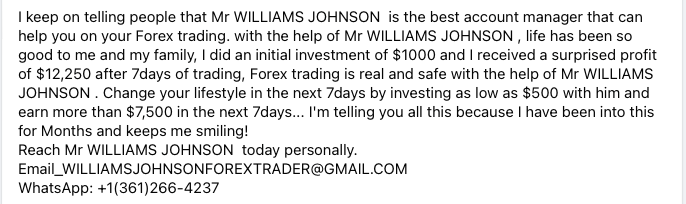
The other challenge that businesses are faced with are people leaving reviews that have nothing to do with the organisation and are just trying to con people. Below is one that I’ve seen on a lot of business Facebook pages. Keep an eye on your reviews regularly just to check and if they aren’t legit, delete them or request for them to be removed. It’s not a good look as these do manipulate your overall results and even though they generally have a positive impact, it’s still misleading potential customers if they don’t delve in to the detail.
What next
Well it’s over to you now to consider whether you want to encourage reviews or let them happen organically. Understanding the benefits is only one part but ensuring that you can incorporate this effectively in to your process without incurring additional cost or resource is very important. If you are in a service based industry I would be encouraging you to consider reviews to help drive greater brand and product awareness. Outside of this, consider the overall benefits and work from there – organic may suffice.
I hope that you’ve gained from my learning series. I look forward to sharing my next multi part series with you shortly.
Remember, marketing has so many different facets to it and it’s not just about the advertising. I hope that my learning series provide you with insight to help you gain the most from all levels of marketing your business.
Good Luck!
The Marketing Elf
© August 2022
 The Marketing Elf